Aging dermis: Improving you skin as you age
Aging dermis. As we age our skin changes. But we want our skin to look 'alive' - not wrinkled or dried out. This page offers you some tips for having lovely skin as you age.
First, educate yourself. If you want to look your best, you need to take some time to learn about your skin ... especially your aging dermis. What changes you should expect ..and what you can do to can keep your skin smooth and fresh looking even as you age.
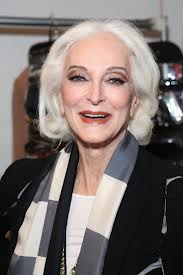
You can have beautiful skin at any age. Models, like Carmen
Dell'Orefice (above) who was in her 80s when this photo was taken, still have beautiful skin. Carmen is often sought out by photographers who want an attractive older woman in their ads.
If you want to have such beautiful skin, you can. BUT you'll need understand how your skin is affected by age. And then act action to deal with these changes.
Facts about your Dermis
'Dermis' is the name given to the second layer of your skin. This second layer is important because it controls how you appear to other people. If you care about how look, you need to care for your dermis! Here are some basics:
- Your dermis makes up about 90% of your skin's thickness.
- Dermis includes both collagen and elastin fibers.
- It also contains fibroblasts (cells that repair your skin).
- Your sweat glands and special glands that secrete 'pheromones' (subtle attractors to the opposite sex ) are in the dermis of your armpits, your ear canals, nipples and genital areas .
A healthy dermis makes you look and smell younger.....and it makes you look more attractive. Good reasons to care for your dermis! You can find special products that will help you do this. Take a look at: Skin care products on Amazon
Your aging dermis:
Your skin undergoes a number of changes as you grow older. Here are the seven that are most important:
- One of the most noticeable changes to the Aging dermis is in the bonding between the layers of you skin. There are tiny projections that connect your dermis to your epidermis (outer, visible skin). These bonds become flatter with age and so fewer nutrients move to the outer layer of your skin AND there are fewer moisture holding molecules between the two layers of skin. Result? 'Dry Skin'. Also, since these tiny projections grow flatter, the attachment between the layers is less firm. As a result even a minor injury can cause the two layers of your skin to separate. The result? 'skin blisters'.
- Blood vessels in your dermis also change - especially if you have been exposed to a lot of sun. Remember all the warning about using Sun Screen every time you go out. Those warning are not just cancer prevention reminders. They are also 'beauty advice'. Direct sunlight causes the blood vessels in your dermis to thicken. They begin to dilate. This results in the spidery web of tiny red threads you sometimes see on the skin of older persons.
- The most common result of aging dermis is a reduction in the cells (fibroblasts) that make up your collagen and elastin. This reduction means your skin can not renew itself quickly. Your skin may lose some of its softness and elasticity. And te more sun you have been exposed to the worse it is. That is why people who have spent a great deal of time outdoors (without sunscreen) have 'tight' looking skin.
- Although it is normal for your skin to get thinner with age, increasing rigidity of your elastin can also cause your skin to thicken and wrinkle. This is especially true in sun exposed skin. (Now you know why so many beauty advisers tell you to use Sunscreen with a high SPF every time you will be in the sun.)
- 5.Your blood vessels in the dermis also change - especially if you have been exposed to a lot of sun. All those warning about using Sun Screen every time you go out are not just cancer prevention reminders. They are also 'beauty advice'. Sun causes the blood vessels in your dermis to thicken. They begin to dilate. Result? - that spidery web of tiny red threads you sometimes see on the skin of older people.
- 6.But the most common result of aging dermis is a reduction in the cells (fibroblasts) that make collagen and elastin. When this happens your skin can not renew itself quickly. As a result your skin loses some of its softness and its elasticity. And the more sun you have been exposed to the worse it is. That is why people who have spent a great deal of time outdoors (without sunscreen) have 'tight' skin.
- 7.Although it is normal for your skin to get thinner with age, the increasing rigidity of your elastin can also cause your skin to thicken and wrinkle. This is especially true in sun exposed skin. (Now you know why so many beauty advisers tell you to use Sunscreen with a high SPF every time are in sunlight.)
Want to educate yourself some more? Click here to read about the Third Layer of your skin
(Also, you can find a whole Index of articles about skin care by clicking: Aging dermis and the Full index of Skin Care articles
Reader comments on this topic:
Readers often have useful tips to share. Please use the form below . (Please put the url from the top of this page on the form so I know where to put your comment. This same form is used on other pages). Thanks!
Have you experience with this?
Do you have experience with this topic? Please share it!
Home | Privacy | Financial Disclosure | Donate